It greatly depends on what draft you’re talking about. The only thing preplanned is big beats that need to be in the story to make it cohesive. Everything else is added on the spot as I’m working through the draft. Revision comes from seeing the story’s weaknesses and flaws and smoothing them over or making a segment more robust. Sometimes things are overwritten and need to be trimmed down. Just depends on the draft.
To answer that, I must add a caveat first. I always have scraps of characters floating in my head. They’re never are they full-blown and completely rounded out. I might have an idea for a devout religious follower, or a down-on-his-luck thief, and that’s the end of it. It’s once I bring them into a story that they get fully fleshed out.
Reasons:
One: What makes me decide to bring a new character into the story is first and foremost a need for a character. I ‘need’ a wise mentor. I ‘need’ a hero. The story has a void and I must fill it.
Two: A character needs growth or change. I introduce a new character to be a catalyst for an already established character. With this new addition, it either makes them better, makes them worse, or changes/revitalizes their arc.
Three: Creative impulse. I think to myself, ‘wouldn’t it be cool if I did this…’ So, I write that character as a one-off, here for a story, gone the next.
Four: In whatever band of characters I have, I need someone to round out the group, to be a counter balance to a POV. See reasons one and two.
Five: Creating an entry point for readers in a strange environment. This character is a ‘local’ to a new destination that’s been unexplored. They are a point of authority in this new environment, and they can explain to the other characters/readers what they need to know.
Six: Hierarchy. An apprentice needs a master; a righteous warrior needs his priest and the religious architect around that such as gods, etc. If it can be extrapolated, it needs to be shown, should the story need it.
Seven: Because a character fulfills a plot hole or unexplained portion of a book and acts as a foil. If there’s an enigmatic portion of a book/ series, and it’s building to a crescendo, then there must be a culminating effect that brings us this character. See reasons one and two.
In this case, the character would be crafted by need, so I focus enough on them to make them unique. Generally speaking, no, I don't pull from existing thoughts about characters. I create someone completely new

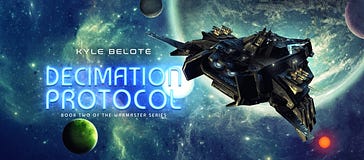
It greatly depends on what draft you’re talking about. The only thing preplanned is big beats that need to be in the story to make it cohesive. Everything else is added on the spot as I’m working through the draft. Revision comes from seeing the story’s weaknesses and flaws and smoothing them over or making a segment more robust. Sometimes things are overwritten and need to be trimmed down. Just depends on the draft.
Probably somewhere between 8 and 10 hours in a night for the longest, and the shortest is probably somewhere around 5–10 minutes.
To answer that, I must add a caveat first. I always have scraps of characters floating in my head. They’re never are they full-blown and completely rounded out. I might have an idea for a devout religious follower, or a down-on-his-luck thief, and that’s the end of it. It’s once I bring them into a story that they get fully fleshed out.
Reasons:
One: What makes me decide to bring a new character into the story is first and foremost a need for a character. I ‘need’ a wise mentor. I ‘need’ a hero. The story has a void and I must fill it.
Two: A character needs growth or change. I introduce a new character to be a catalyst for an already established character. With this new addition, it either makes them better, makes them worse, or changes/revitalizes their arc.
Three: Creative impulse. I think to myself, ‘wouldn’t it be cool if I did this…’ So, I write that character as a one-off, here for a story, gone the next.
Four: In whatever band of characters I have, I need someone to round out the group, to be a counter balance to a POV. See reasons one and two.
Five: Creating an entry point for readers in a strange environment. This character is a ‘local’ to a new destination that’s been unexplored. They are a point of authority in this new environment, and they can explain to the other characters/readers what they need to know.
Six: Hierarchy. An apprentice needs a master; a righteous warrior needs his priest and the religious architect around that such as gods, etc. If it can be extrapolated, it needs to be shown, should the story need it.
Seven: Because a character fulfills a plot hole or unexplained portion of a book and acts as a foil. If there’s an enigmatic portion of a book/ series, and it’s building to a crescendo, then there must be a culminating effect that brings us this character. See reasons one and two.
In this case, the character would be crafted by need, so I focus enough on them to make them unique. Generally speaking, no, I don't pull from existing thoughts about characters. I create someone completely new